
Chicago nursing home neglect lawyers explain the updated recommendations
Infection is one of the most common and serious health issues facing nursing home residents, and is often the result of neglect. But new industry standards for facilities aim to improve infection prevention and control to keep residents safe.
For the first time in 17 years, nursing homes across the country are receiving new national guidance on infection prevention and control. The update is in a report published by the Society for Healthcare Epidemiology of America (SHEA) and the Association for Professionals in Infection Control and Epidemiology (APIC). It comes as nursing homes care for residents with increasingly complex medical needs and face growing threats from antibiotic-resistant organisms and other emerging pathogens.
For families, these new standards are more than technical adjustments. They’re a critical step toward improving safety and accountability in long-term care facilities.
Why were changes needed?
Since the last infection control guidance was issued in 2008, nursing homes have evolved dramatically. Many now care for residents with advanced medical needs, once handled only in hospitals. This includes patients who rely on ventilators, dialysis, IV therapy, wound care, and other intensive treatments.
These procedures carry a higher risk of infection and colonization with multidrug-resistant organisms (MDROs), such as MRSA and C. difficile. The new report warns that the infection risks for nursing home residents now closely resemble those faced by hospitalized patients. Millions of serious infections occur in nursing homes, skilled nursing facilities, and assisted living facilities each year.
Deb Burdsall, PhD, a long-time infection prevention consultant and one of the report’s authors, told McKnight’s Long-Term Care News that the update was necessary to “catch up” with nearly two decades of change.
What are the new recommendations?
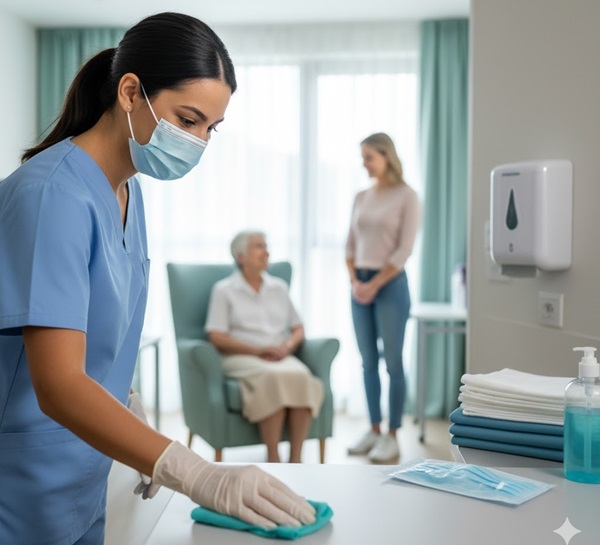
At the heart of the new standards is a renewed focus on core infection control practices. These are the same simple but powerful measures that have always formed the foundation of safe care. This includes proper hand hygiene, cleaning and disinfection of equipment, and consistent use of standard precautions.
The updated guidance also acknowledges the tension between maintaining a “home-like” environment and enforcing infection control measures. It reminds providers that resident comfort and safety are not mutually exclusive and that effective infection prevention is essential to maintaining residents’ health and quality of life.
Another key section of the report highlights staffing and leadership responsibilities. Infection prevention programs can only succeed when facilities have enough trained staff and proper oversight. The guidance calls for:
- At least one full-time infection preventionist (IP) in facilities with 100 or more licensed beds, or in those providing ventilator or dialysis services
- At least a half-time IP in smaller facilities
- Direct reporting to administrative and medical leadership, ensuring infection prevention activities are integrated into performance improvement programs
- Adequate access to PPE, disinfectants, and data systems to support infection tracking and compliance
The report also urges facilities to invest in staff retention, training, and infrastructure to reduce turnover, which is a known factor in poor infection control compliance.
How can an attorney help nursing home residents who develop an infection?
These new standards represent progress, but not every nursing home will meet them. When facilities ignore infection control protocols, fail to provide enough staff, or neglect to supply proper protective equipment, residents can suffer severe consequences such as sepsis, pneumonia, urinary tract infections, and fatal outbreaks of antibiotic-resistant bacteria.
Families have the right to expect that nursing homes will follow established infection prevention practices. Under Illinois and federal law, facilities can be held legally responsible for negligence that causes harm to residents.
An experienced Chicago nursing home neglect attorney can:
- Investigate whether the facility failed to follow recognized infection control procedures
- Review staffing levels, maintenance records, and internal reports to identify systemic neglect
- Work with medical experts to determine whether the infection was preventable
- Pursue financial compensation for medical costs, pain and suffering, and wrongful death if a loved one’s infection proved fatal
At Ferrell Young, LLC, we’ve seen firsthand how preventable infections devastate families. We support stronger national standards and hold negligent facilities accountable when they fail to protect vulnerable residents.
If your loved one developed a serious infection in a Chicago-area nursing home, contact us today for a free consultation. We can review what happened, explain your rights, and help your family seek justice and accountability.